Skin Tag Removal
Overview
How your skin reacts afterwards
These are normal and settle on their own. Anything severe or long-lasting — call us.
The treated spot usually appears slightly red or pink for a few days.
The area may feel gently sore or tender, similar to a minor burn, especially right after the procedure.
A small, dry scab or crust may form over the treated site as part of the natural healing response. This protects the area and should not be picked.
Some slight swelling around the spot can occur but resolves quickly.
Most sites heal within 5–10 days; the redness fades, and the skin gradually blends back to normal.
When aftercare steps are followed, the chance of infection is very low.
Occasionally, temporary hypo- or hyperpigmentation (lighter or darker) may appear but usually resolves in weeks.
These reactions are typical and indicate healthy repair. Notify your provider if you experience persistent pain, pus, or unusual swelling.
How Skin Tag Removal Works
The skin tag and surrounding skin are examined. The area is cleaned thoroughly with an antiseptic solution.
Cream may be applied to numb the area and ensure client comfort.
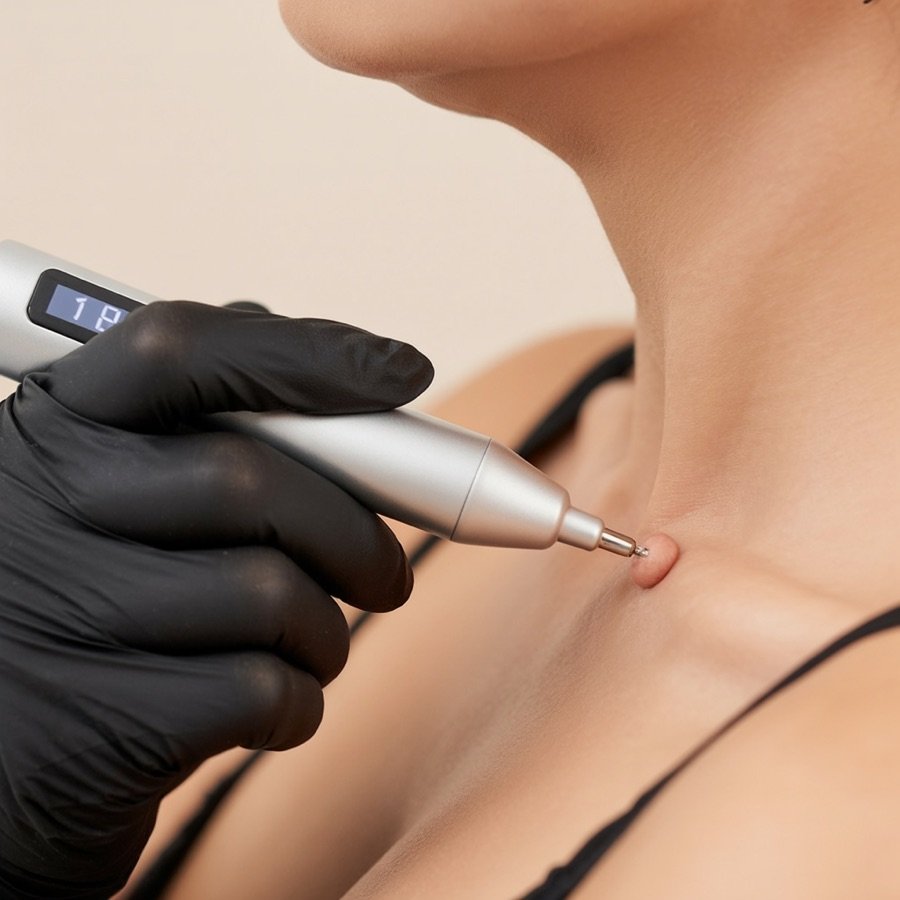
A sterile, pen-sized electrosurgical device with a fine wire or needle tip is prepared for the procedure.
The device delivers a carefully controlled electric current through the tip, making contact with the base of the skin tag.
The electric current “burns off” or dessicates the tag, coagulating tissue and sealing blood vessels to prevent bleeding. The tag detaches easily, either instantly or after additional current is applied.
Pre Care
- lean Area: Gently cleanse the skin around the tag with mild soap; avoid heavy creams or lotions.
- No Irritants: Do not apply strong skincare actives (retinoids, acids, etc.) or harsh exfoliants on/near the treatment site for 48 hours prior.
- Avoid Hair Removal: Refrain from shaving, waxing, or plucking near the area for at least 2 days before.
- Inform Your Provider: Let your practitioner know about any skin sensitivities, allergies, medications, or recent infections.
- No Blood Thinners: Avoid aspirin, NSAIDs, fish oils, or supplements that may thin the blood for 24–48 hours prior (unless prescribed by a doctor).
- Stay Hydrated: Drink water and eat a light meal before your session for comfort.
After Care
- Keep Area Clean & Dry: Gently cleanse with mild soap; pat dry. Avoid soaking or swimming for 3–5 days.
- Do Not Pick Scabs: Let any crust or scab fall off naturally to prevent scarring.
- Apply Ointment: Use an antibiotic ointment or soothing gel as directed to aid healing.
- Avoid Irritation: Skip strong skincare products (retinoids, acids, scrubs) near the area until fully healed.
- Protect from Sun: If exposed, cover with clothing or use sunscreen after the area closes to prevent pigmentation changes.
- No Makeup or Heavy Creams: Avoid these on or near the treated spot for a few days.
- Watch for Signs of Infection: Contact your provider if you see significant redness, swelling, pus, or persistent pain.
- Normal Activities: Resume routine daily activities, but avoid heavy exercise and sweating for 24 hours.
Results, who it suits, and who it is not for
- Most skin tag removals are single-session procedures. If multiple tags are present, or if the area needs to be treated in stages (due to quantity or patient comfort), the next session can be scheduled 1 to 2 weeks after the initial treatment—enough time for the area to heal.
- Healing & Visible Results:
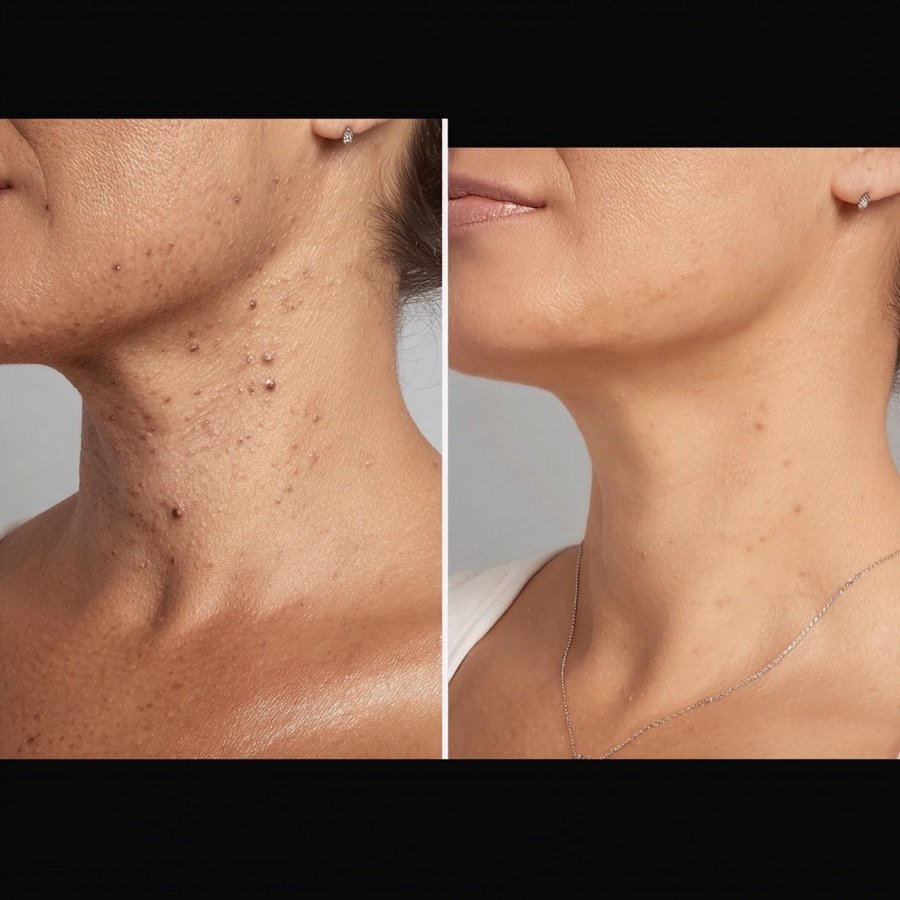
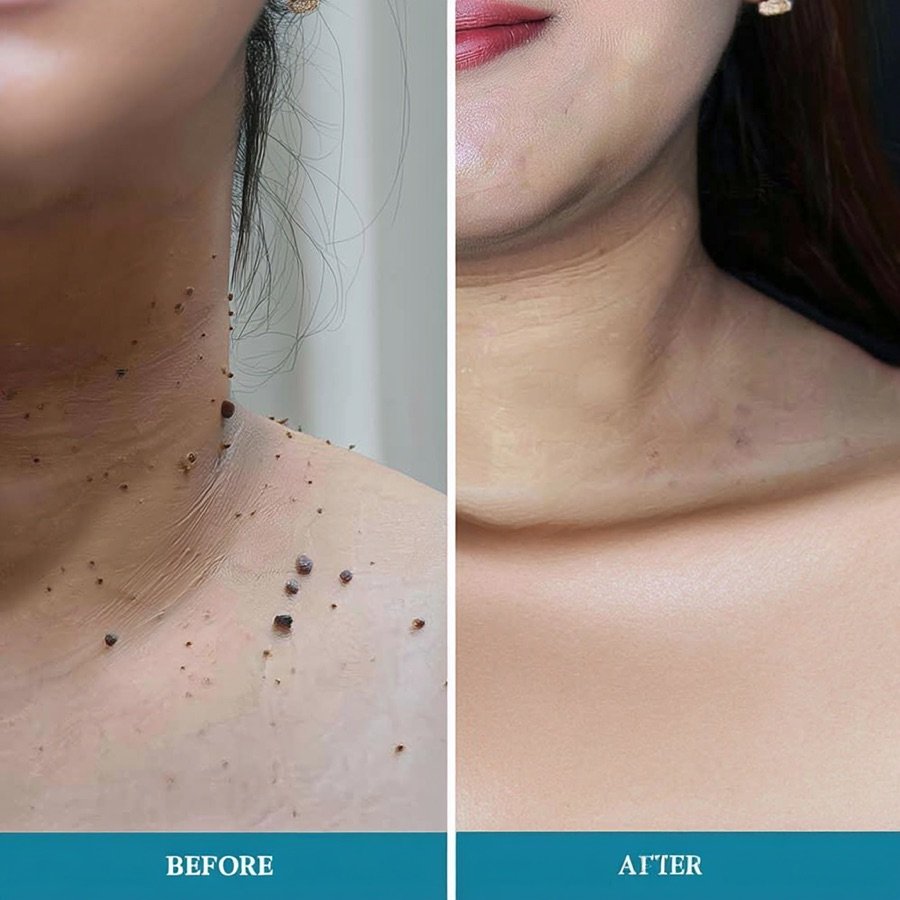
- The treated spot typically heals within 5 to 10 days. Redness and scabbing resolve as the area returns to normal skin tone. The removal is instant, with the skin tag gone immediately after the procedure.
- Follow-Up:
- Clients may be advised a follow-up visit within 1 to 2 weeks to check healing, address any concerns, or treat additional tags if planned.
- Maintenance & Recurrence:
- Skin tags do not usually regrow at the same spot, but individuals prone to skin tags may develop new ones elsewhere over time. Maintenance is not typically needed unless new tags appear.
- Sensitive Skin or Complex Cases:
- Those with sensitive skin or rare healing concerns may require slightly longer intervals (2 to 3 weeks) before additional sessions.