
Tattoo Removal
Overview
Reschedule Policy
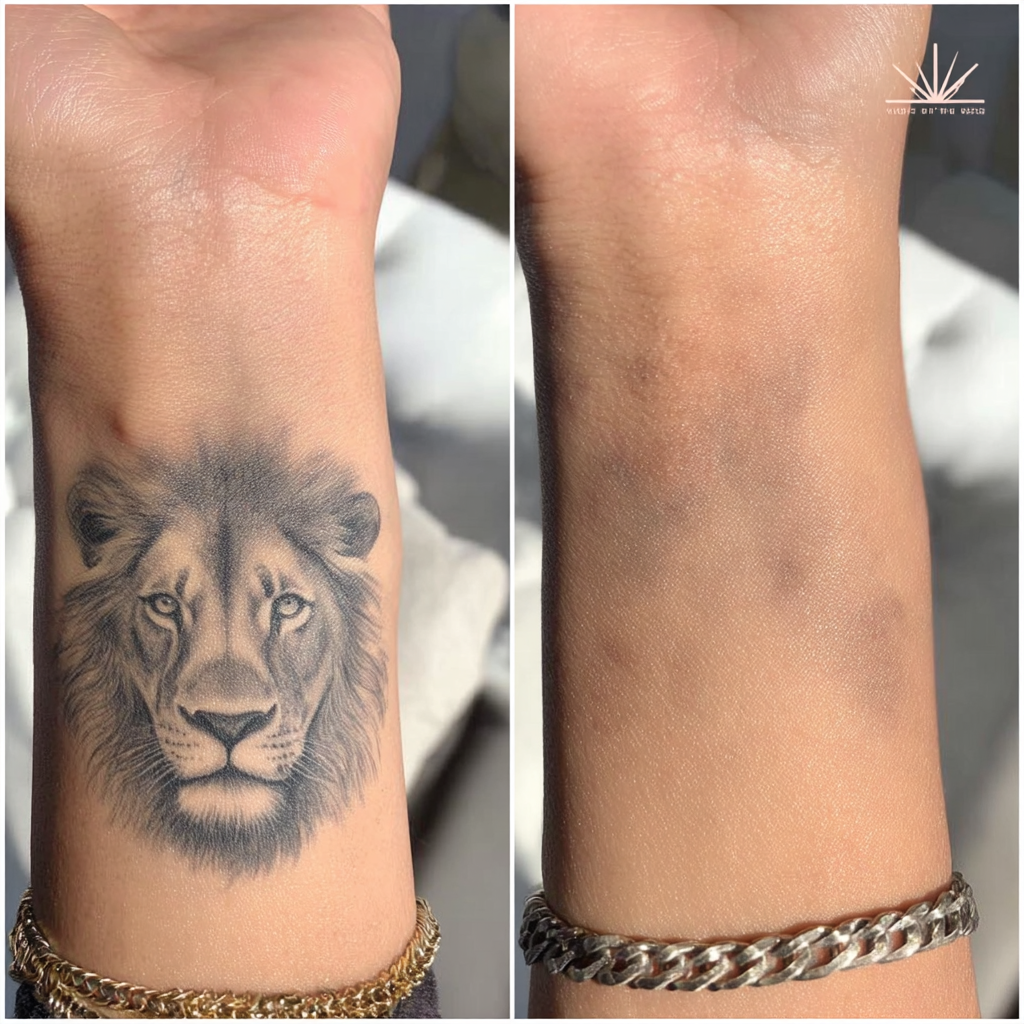
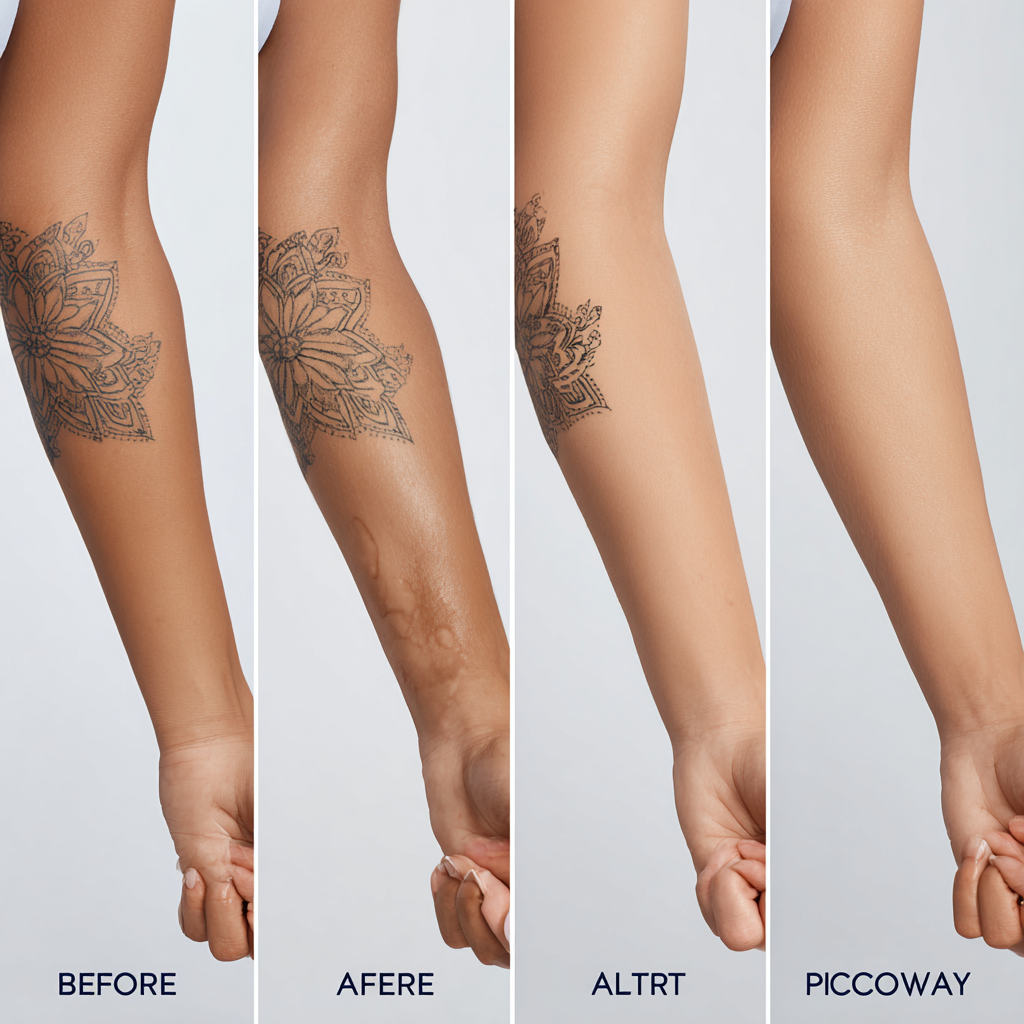
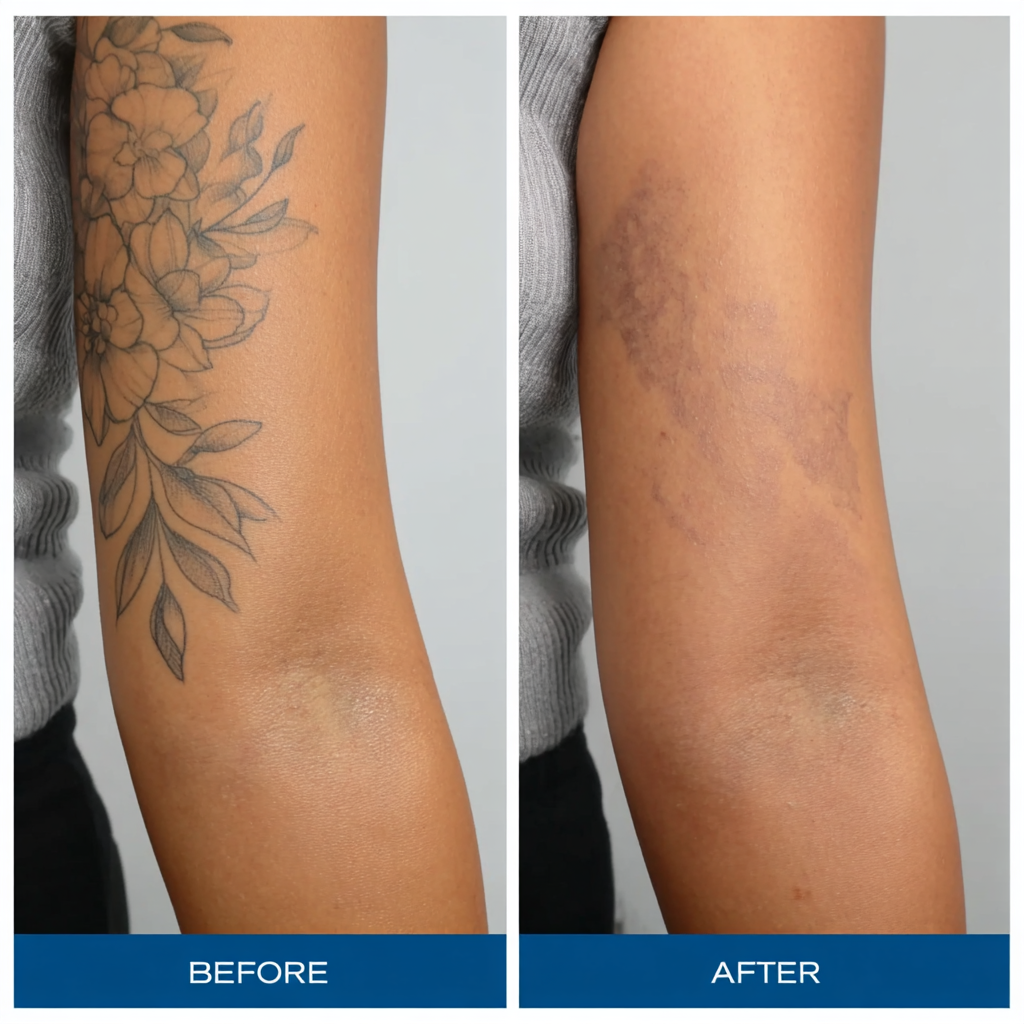
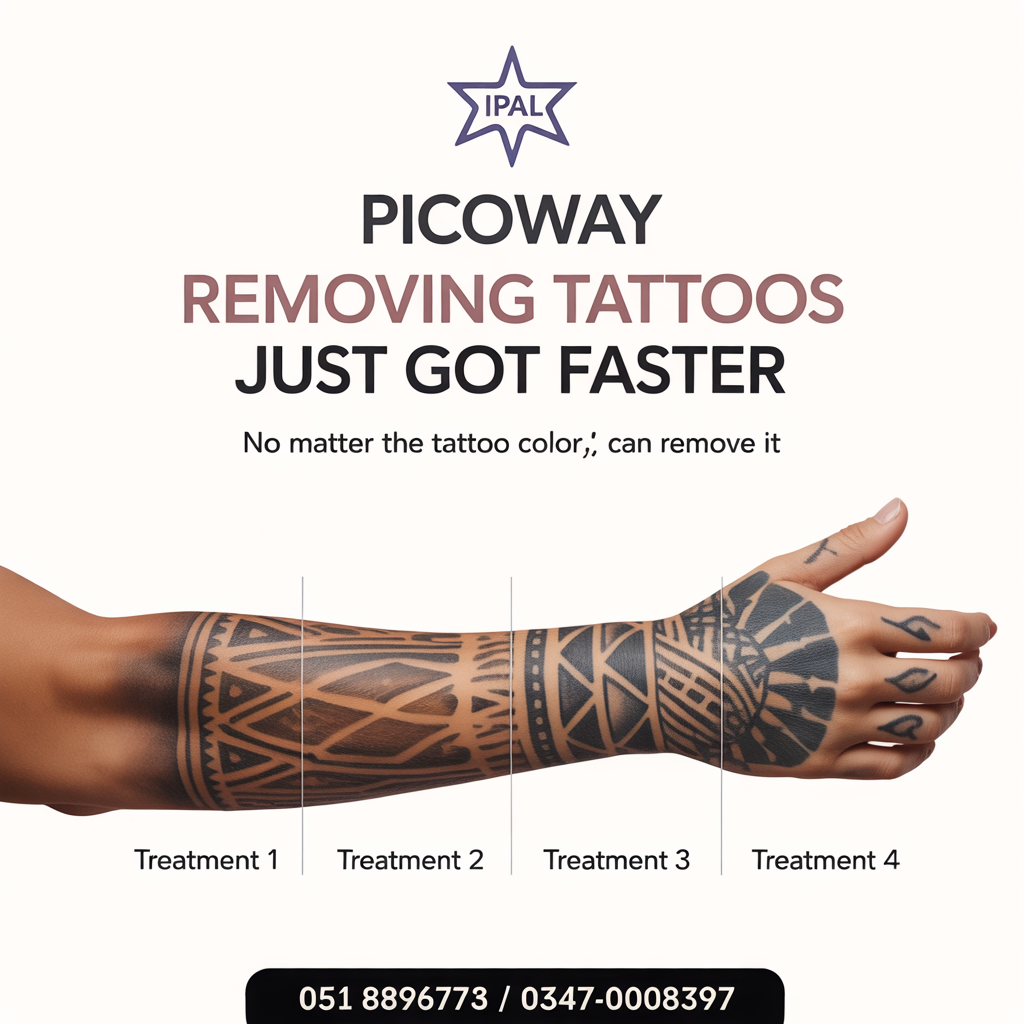
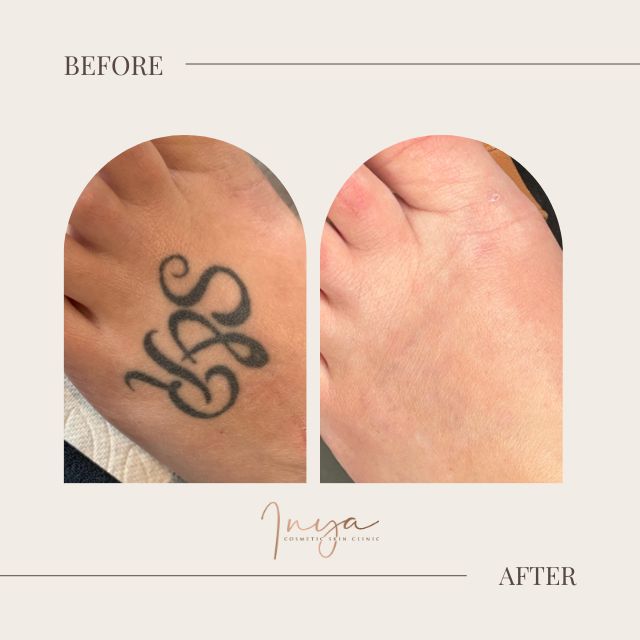
It is recommended to schedule each laser tattoo removal session 4 to 8 weeks apart. This interval allows the skin to heal fully, reduces the risk of complications, and gives the body time to clear broken-down ink particles. Expected Results: Visible fading starts after the first or second session but varies depending on tattoo size, ink color, depth, and skin type. Multiple sessions (typically 6–10) are required for substantial or complete removal. Healing: Redness, swelling, and minor scabbing resolve within 7–10 days post-session. Final results (full removal or significant fading) are achieved gradually over several months, as the skin regenerates and eliminates residual ink. Complete clearance is possible for most tattoos, but resistant colors or older ink may need extra treatments and may leave subtle shadows or traces.
Consultation & Assessment
Review tattoo details (color, size, age, skin type). Discuss expectations, risks, and the estimated number of sessions.
Preparation
Clean the tattooed area thoroughly. Apply topical numbing cream (if needed) for comfort.
Laser Procedure
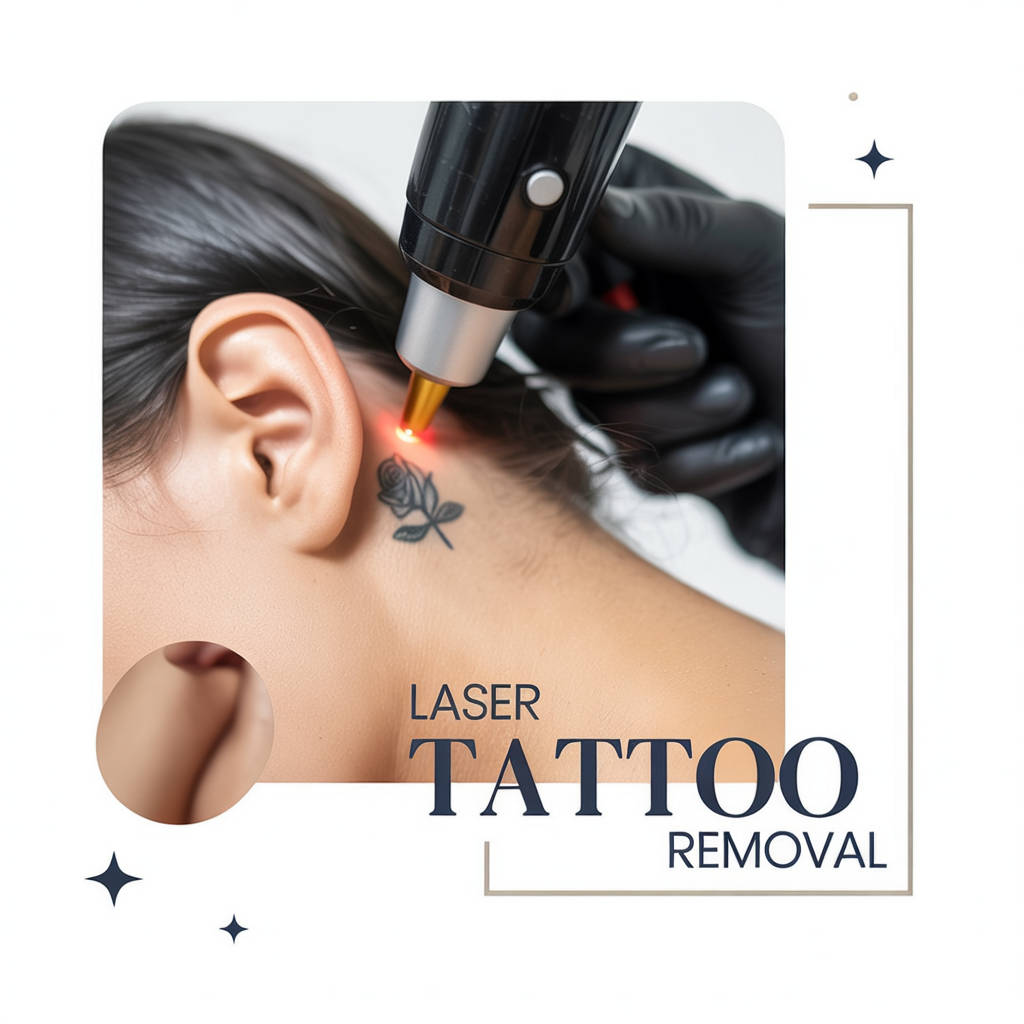
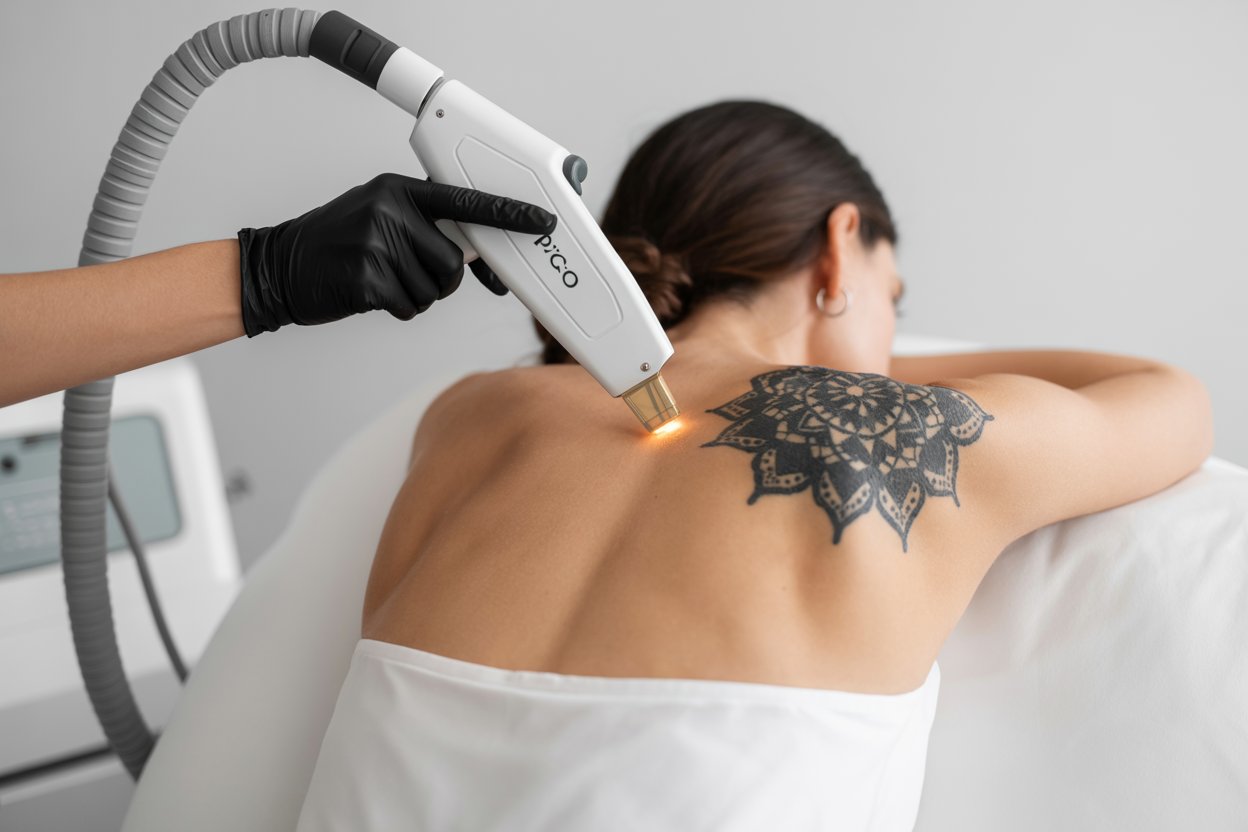
Protective eyewear is provided to the client. The practitioner targets the tattoo with a specialized laser, emitting pulses that break up ink particles.
Immediate Aftercare
Apply a cooling device or cold compress to soothe the skin. Cleanse the area gently and apply a sterile dressing or healing ointment.
Post-Session Instructions
Advise on skin care (gentle cleansing, avoiding sun, no scratching or picking). Schedule the next session (usually after 4–8 weeks).
Ongoing Evaluation
Monitor fading and healing. Repeat sessions until the desired result is achieved.
Pre Care
- No Sun Exposure: Avoid tanning or direct sun exposure on the tattoo area for at least 2–4 weeks before treatment. Sunburned or recently tanned skin increases risk of side effects.
- No Harsh Products: Discontinue use of retinoids, acids, bleaching creams, or harsh exfoliants on the area for 5–7 days prior.
- Stay Hydrated & Nourished: Drink plenty of water and eat a light meal before the appointment to support healing.
- No Blood Thinners: Avoid aspirin, NSAIDs, or vitamin E supplements for at least 24–48 hours before the session unless medically necessary. These increase bruising or bleeding risk.
- No Waxing or Hair Removal: Refrain from waxing, laser hair removal, or depilatory creams on the tattoo site for 2 weeks prior.
- Clean Skin: Arrive with freshly cleansed skin, free from makeup, lotion, perfume, or deodorant on the treatment area.
- Inform Your Provider: Disclose any skin infections, active rashes, allergies, or recent changes in medication. Share medical history (e.g., history of keloids, delayed healing, immune disorders).
- Clothing: Wear loose, comfortable clothing that allows easy access to the tattoo.
After Care
- Immediate Skin Care: Apply a thin layer of a recommended healing ointment such as Soframycin (antibacterial cream widely used in India), Neosporin, or Bepanthen to the treated area immediately after the session. These prevent infection and promote healthy healing.
- Keep It Clean & Dry: Cleanse gently with sterile saline or mild soap and water; pat dry with a clean towel. Avoid soaking the area or exposing it to swimming pools, hot tubs, or direct moisture for 48 hours.
- Daily Application: Reapply the ointment twice daily until the skin fully heals—usually 7–10 days. Switch to a gentle moisturizer (e.g., Cetaphil, Vaseline) once crusting or scabbing subsides.
- No Scratching or Picking: Allow scabs/blisters to fall off naturally; picking increases the risk of scarring or infection.
- Sun Protection: Shield the area from sunlight using clothing or bandages. Avoid direct sun for 2–4 weeks or until skin tone normalizes. Apply a broad-spectrum sunscreen (SPF 50+) once the area has completely healed.
- Good Hygiene Practices: Always wash hands before touching the treated skin. Use clean, soft dressings if needed; change them daily or whenever wet/soiled.
- Avoid Irritants: Refrain from using perfumes, deodorants, or harsh skincare products on or near the area.
- Monitor for Infection: If you notice pus, excessive redness, persistent pain, or fever—consult your clinic promptly.